- Дом
- О нас
- Продукты
- Проекты
- Новости
- Отправить запрос
- Связаться с нами

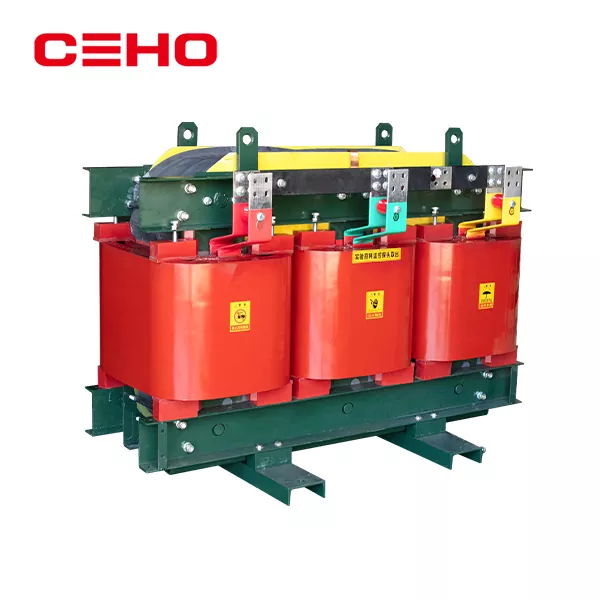
Dry-type transformers are widely used in high-rise buildings, airports, factories and other places because of their safety, environmental protection and maintenance-free characteristics. For master electricians, correct and standardized wiring is the key to ensuring the safe operation of equipment. Below, we will use easy-to-understand language to sort out the wiring methods and core steps of dry-type transformers.
I. Understand terminal blocks: distinguish between “input” and “output”
Before starting the wiring, you must first understand the labels on the transformer nameplate and terminal blocks. Dry-type transformers are usually divided into high-voltage side (input end) and low-voltage side (output end):
II. Common wiring methods
The wiring method of dry-type transformers mainly depends on the needs of the power grid. The most common combinations are as follows:
1. High voltage side connection method:
2. Low voltage side connection method:
III. Four core steps for standardizing wiring
The first step: "physical examination" before wiring
Before formal wiring, the insulation resistance of the transformer must be tested with a megger. Short-circuit the input and output terminals and measure their insulation resistance to ground respectively. Usually, a megohmmeter with a 1000V or 2500V range is used, and the resistance must be greater than the specified standard (generally required to be greater than 2MΩ, with higher requirements on the high-voltage side) to ensure that the equipment is not affected by moisture or damage during transportation and storage.
Step 2: High-voltage side (power incoming line) wiring
Clean the high-voltage terminals to ensure that the contact surfaces are free of oxidation and dust.
Connect according to the connection method (Δ or Y) required on the nameplate. If it is a delta connection, you need to use copper bars or wires to short-circuit U1-W1, V1-U1, and W1-V1 respectively.
Connect the three-phase power cords (yellow, green, and red) to the U1, V1, and W1 terminals respectively.
Key point: Appropriate wire lugs or equipment clamps must be used for wiring, and tightened to the specified torque with a torque wrench to prevent heat generation caused by poor contact.
Step 3: Low voltage side (load outlet) wiring
Connect the u, v, and w terminals on the low-voltage side to the incoming circuit breaker of the low-voltage distribution cabinet respectively.
Connect the neutral point n (or N) to the neutral busbar of the low-voltage cabinet with a copper bar or wire of specified cross-section.
Key point: The current on the low voltage side is usually very high and the connection must be absolutely secure. The phase sequence must correspond to the high-voltage side (that is, high-voltage phase A corresponds to low-voltage phase a), otherwise the motor will reverse or the equipment will be damaged.
Step 4: Grounding and Safety Check
Protective grounding: The outer shell, core, and base of the transformer must be reliably connected to the grounding grid with an independent grounding wire (usually not less than 25mm² copper wire).
Working grounding: The neutral point (N line) on the low-voltage side must also be reliably grounded.
Final inspection: Confirm that all bolts are tightened, the phase sequence is correct, and there are no tools or debris left around.
IV. Warm reminder before sending power
After the wiring is completed, do not rush to run it with load. A no-load power test should be performed first to observe whether the transformer has any abnormal buzzing, sparking or odor. At the same time, check whether the temperature controller display is normal and whether the fan can start automatically when the temperature rises. After confirming that everything is normal, the load can be gradually connected.
Safety warning: The wiring of dry-type transformers is a special operation and must be performed by professionals with electrician certificates. Before operation, be sure to cut off the superior power supply, hang a "no closing" warning sign, and strictly abide by safe operating procedures!